Google's Hidden Fast Search Algorithm: How AI Overviews Really Work Behind the Scenes
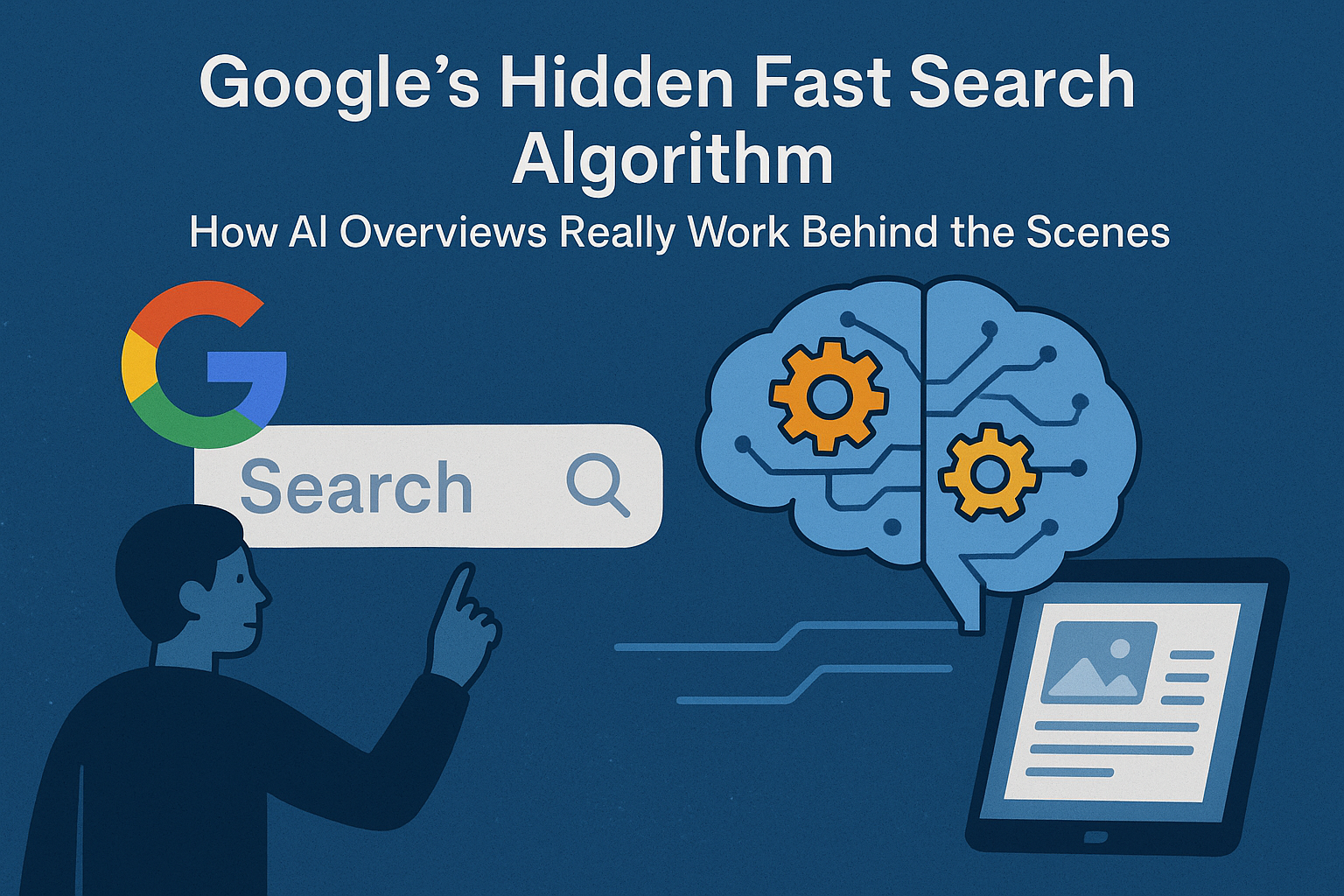
The recent Google antitrust case has unveiled a fascinating revelation that changes everything we thought we knew about how AI Overviews generate their responses. Court documents have exposed Google’s proprietary Fast Search technology, shedding light on why early AI Overview results sometimes featured questionable content and spam.
The Fast Search Discovery: A Game-Changing Revelation
The antitrust memorandum opinion contains a crucial passage that explains how Google’s Gemini models are “grounded” – essentially how they retrieve and verify information before generating AI Overview responses. This process doesn’t work the way most SEO professionals assumed.
According to the court documents, Google employs a specialized system called FastSearch that operates independently from their main search algorithm. This technology prioritizes speed over comprehensive quality assessment, fundamentally altering how content gets selected for AI-powered responses.
How Fast Search Differs from Traditional Google Search
Speed vs. Quality Trade-off
Fast Search represents a strategic compromise between response time and result quality. The court memorandum explicitly states that while FastSearch delivers results faster than standard search, “the resulting quality is lower than Search’s fully ranked web results.”
This explains several phenomena that SEO experts observed during AI Overview’s early rollout:
- Spam content occasionally appearing in responses
- Penalized websites sometimes getting featured
- Inconsistent quality compared to traditional search results
Rank Embed: The Foundation Technology
Fast Search builds upon Google’s Rank Embed model, a sophisticated deep-learning system that focuses on semantic understanding rather than traditional ranking factors. This model demonstrates several key characteristics:
Efficiency Through Selectivity: Rank Embed processes only 1/100th of the data used by earlier ranking models while maintaining competitive result quality.
Semantic Matching Capabilities: The system excels at understanding user intent even when queries lack specific terminology, making it particularly effective for long-tail searches.
Natural Language Processing: Advanced language understanding allows the model to interpret complex queries and match them with relevant content based on meaning rather than keyword density.
The Link Signal Mystery: Are Backlinks Losing Importance?
One of the most significant implications of the Fast Search revelation concerns the role of traditional ranking signals, particularly backlinks. The evidence suggests that Fast Search may not heavily weight link-based signals in its selection process.
Why Links Matter Less in Fast Search
The court documents indicate that Fast Search prioritizes semantic relevance over traditional authority signals. This approach makes sense when considering the system’s primary objectives:
- Speed Requirements: Analyzing complex link graphs takes time
- Content Relevance: Semantic matching provides more contextually appropriate results
- User Experience: Quick, relevant answers matter more than comprehensive link analysis
Training Data Composition
Rank Embed’s training incorporates two primary data sources:
- Search log data spanning 70 days
- Human rater quality assessments
This combination suggests that user behaviour patterns and expert quality evaluations carry more weight than traditional link-based authority metrics.
Implications for SEO Strategy in the AI Era
Content Quality Over Link Building
The Fast Search revelation signals a potential shift in SEO priorities. While links remain important for traditional search results, AI Overview optimization may require different tactics:
Semantic Optimization: Focus on comprehensive topic coverage and natural language patterns that AI models can easily interpret.
User Intent Alignment: Create content that directly addresses user questions and provides clear, authoritative answers.
Quality Signals: Ensure content meets the standards that human raters would appreciate, as this data directly influences RankEmbed training.
The Multi-Index Theory
Industry experts speculate that Google may maintain separate indexes optimized for different use cases. Fast Search might access a curated subset of the web that emphasizes:
- Sites with consistent user engagement
- Content with proven quality metrics
- Pages that align with human rater guidelines
Technical Architecture Insights
Deep Learning Pattern Recognition
Rank Embed operates as a sophisticated pattern recognition system that identifies relationships between queries and content without traditional human-like understanding. This approach enables:
- Complex semantic matching across diverse content types
- Efficient processing of natural language queries
- Improved handling of ambiguous or incomplete search terms
Continuous Learning Requirements
The court documents reveal that Rank Embed BERT requires regular retraining to incorporate fresh data, indicating that the system continuously evolves based on:
- New search behaviour patterns
- Updated quality assessments
- Changing user expectations
Future Implications for Search Evolution
The Decline of Traditional SEO Metrics
Fast Search’s approach suggests that Google is moving toward more sophisticated content evaluation methods that prioritize:
- Semantic relevance over keyword optimization
- User satisfaction over link authority
- Content utility over traditional ranking factors
Preparation Strategies for SEO Professionals
Understanding Fast Search’s methodology helps inform future-focused SEO strategies:
Comprehensive Content Creation: Develop in-depth resources that thoroughly address user questions and provide complete information on topics.
Natural Language Optimization: Write content that sounds natural and conversational, matching how users actually search and speak.
User Experience Focus: Prioritize page experience, engagement metrics, and content that genuinely helps users achieve their goals.
Conclusion: Adapting to the New Search Landscape
The Fast Search revelation represents more than just technical insight – it’s a window into Google’s evolving approach to information retrieval and presentation. As AI-powered search features become more prominent, understanding these underlying technologies becomes crucial for maintaining visibility and relevance.
For SEO professionals and content creators, this information emphasizes the importance of creating genuinely valuable, well-structured content that serves user needs effectively. While traditional ranking factors remain relevant for standard search results, the AI Overview ecosystem operates by different rules that prioritize semantic understanding and user satisfaction over conventional authority signals.
The future of search optimization lies in understanding and adapting to these AI-driven systems while maintaining focus on fundamental content quality and user experience principles. As Google continues refining these technologies, staying informed about their evolution will be essential for continued search success.
- Latest Posts

Continue reading